02
FALL LINE
The line a body draws
in the seconds around a fall
in the seconds around a fall
A motion-replay kit for children’s ski lessons. Five small sensors worn over the jacket mark the moments worth a second look, so after the run a coach can see what happened before and after a fall — and what to practise next. It comes from my own years of freestyle training, a broken arm and the recovery after it, and the time I spent helping to teach children to ski safely. I did the research, interaction design, industrial and hardware design. It is a detection and teaching-feedback prototype, built for the coach and the parent; the child just skis. It does not claim to prevent injury.
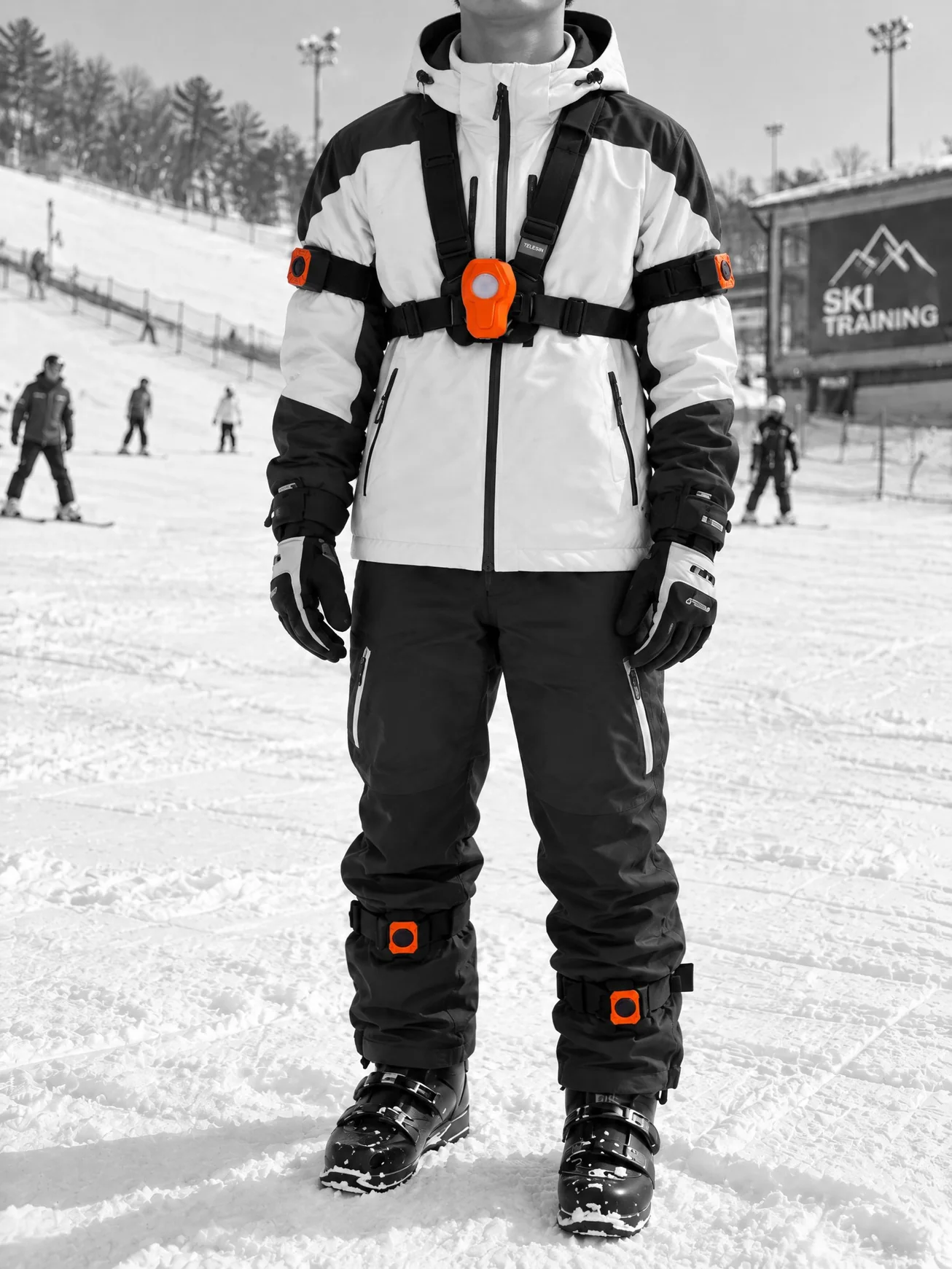
1Chest unit ×1
ESP32-S3 · MPU6500 · vibration motor
Trunk tilt and overall acceleration
2Upper arm ×2
ESP32-C3 · MPU6050
Arm swing, balance reactions
3Shin ×2
ESP32-C3 · MPU6050
Leg and ski motion, jolts
02 Research · why a replay
A coach sees the fall.
Not the five seconds before it.
Not the five seconds before it.
In a children’s lesson the coach watches movement, the route and everything moving around the group, all at once. When a child loses balance, the moments that explain it are usually over before anyone turns to look. Years of freestyle training and a broken arm taught me how a fall builds up; teaching children showed me how little of that a coach actually sees.
→The briefthree questions every replay must answer
When?
When did an unusual movement happen?
Answered by
event markers on the lesson timeline
Where?
Which part of the body changed most?
Answered by
trunk and limbs on one clock, same instant
Back up?
Did they get moving again afterwards?
Answered by
activity after the event, in seconds
Why it happened comes from the coach’s notes and video, not the sensors. The replay never judges whether a child is hurt.
AOn the slopea typical lesson run, in plan
coach
child
other skiers
a fall
Diagram, not to scale
BAnatomy of a fallwhat happens, what is seen, what is kept
A single acceleration threshold only ever sees A. The detection rule waits for B and C as well, which is what separates a fall from a hard landing (page 04).
CWho it is forcomposite personas, drawn from teaching in children’s lessons
Coach · primary
Coach Chen, 34
Runs weekend group lessons for children aged 6 to 10
“I saw her on the snow. I didn’t see why.”
Needs
- Find the moments worth talking about without rewatching a lesson
- Compare trunk and limbs at the same instant
Frustrations
- One pair of eyes for a whole group, the route and the traffic
FALL LINE GIVESA short list of marked moments, each with the seconds before it
Child · wearer
Mia, 8
Second season, linking turns, nervous on steeper snow
“If it beeps every time I fall, I’m taking it off.”
Needs
- To ski without a screen to look at
- Falling to stay a normal part of learning
Frustrations
- Alarms, scores or a red screen after every slip
- Gear that slides, pinches or catches
FALL LINE GIVESNothing to read. One buzz at the start, then just skiing
Parent · reader
Mia’s dad
Watches from the café, hears about it on the drive home
“Was it a bad fall, or just a fall?”
Needs
- To know what happened and whether it matters
- Something specific to practise
Frustrations
- “She fell twice today” tells him nothing
FALL LINE GIVESThe coach’s note in plain words, and one thing to work on
DA lesson, end to endthe coach’s side of it
1Before
2On the snow
3The moment
4After
5Next lesson
Coach does
Fits helmets, checks the group, sets off
Leads runs; watches the route and other skiers
Turns, finds a child down, helps them up
Talks to the child and the parent
Plans what the group practises
Feels
Pain point
No time for fiddly kit with cold hands
Can’t watch every child every second
Missed what led up to it
Feedback rests on memory: “you sat back”
Drills stay generic for the whole group
Fall Line
One-tap kit check; the chest unit buzzes once
Records quietly; coach can drop a marker
Moment marked, with the seconds before it
Replay: curves, body map, video, notes
A drill linked to the moment, in Ski Safe
Insight
The biggest change is not on the slope but after it: feedback moves from memory to something the coach and the child can both look at.
03 System · wearable structure and hardware
One chest unit reads the trunk.
Four nodes read the limbs.
Four nodes read the limbs.
Each node carries its own motion sensor, battery and radio. The chest unit wakes the four limb nodes, collects their data on one clock and stores it, so a coach can set the upper body against the arms and legs at the same instant. The housings are modelled and 3D-printed; the boards are off-the-shelf modules.
1+4
nodes: one chest unit, two upper arms, two shins
6axes
IMU in every node: 3-axis acceleration, 3-axis rotation
50Hz
starting sample rate, on one shared clock
Printed
shells, caps, brackets, trays and bases
Battery capacity is left open on purpose: it is set after weight and run-time tests in the cold, not chosen up front.
AWhere it sits
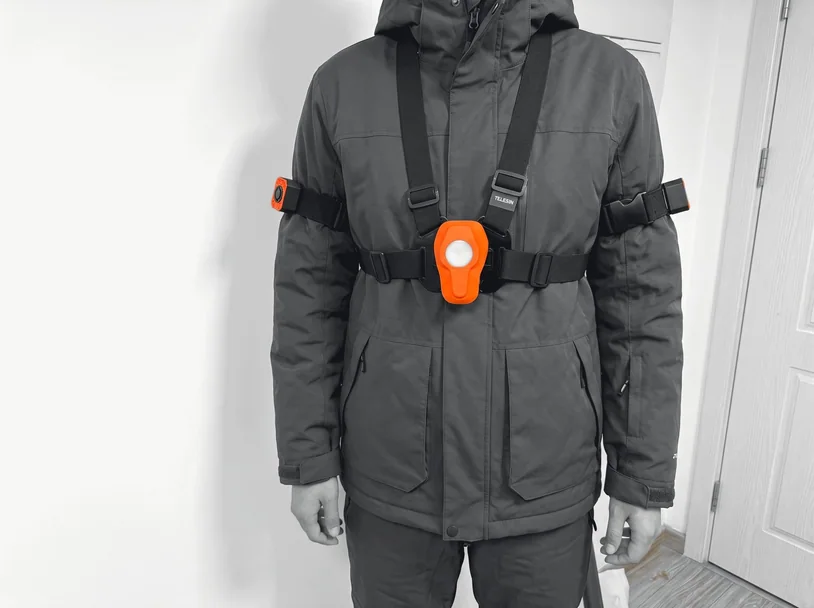
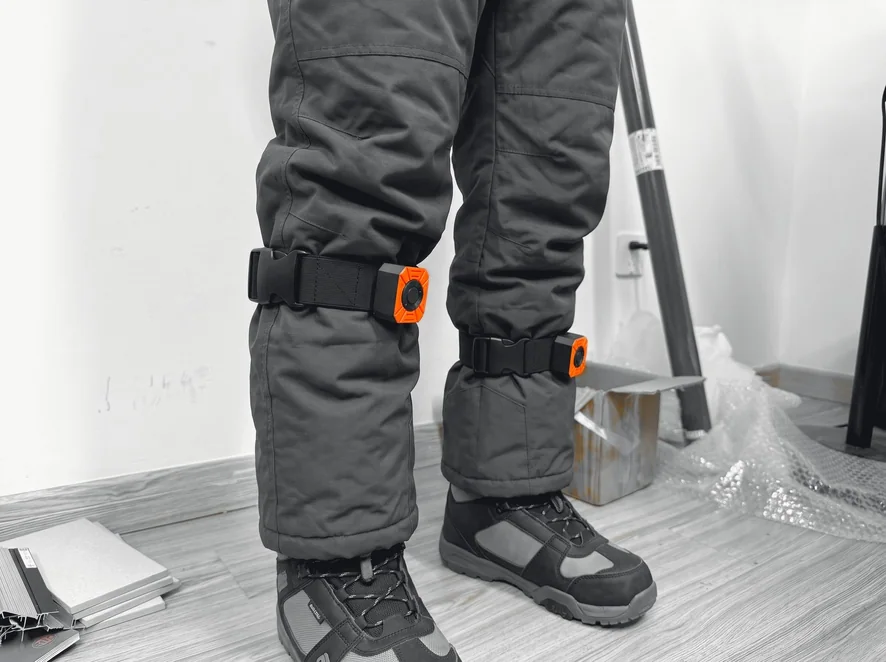
1Chest unit on an off-the-shelf chest harness (GoPro-style mount)
2Upper arm and 3shin on elastic straps with buckles
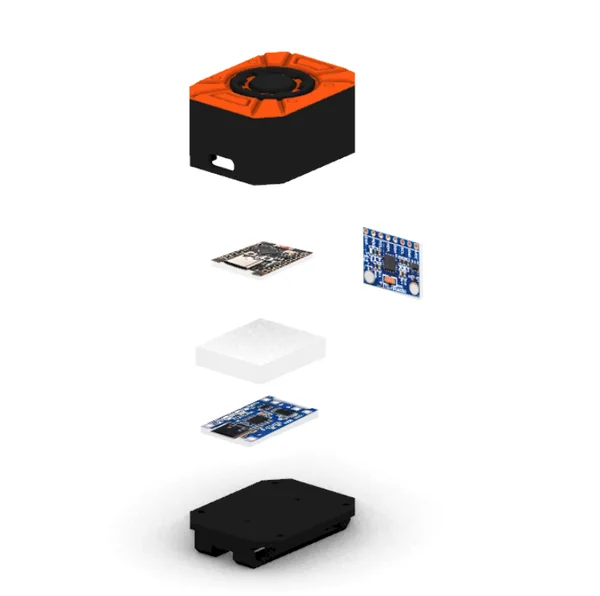
BChest unitexploded, 13 parts
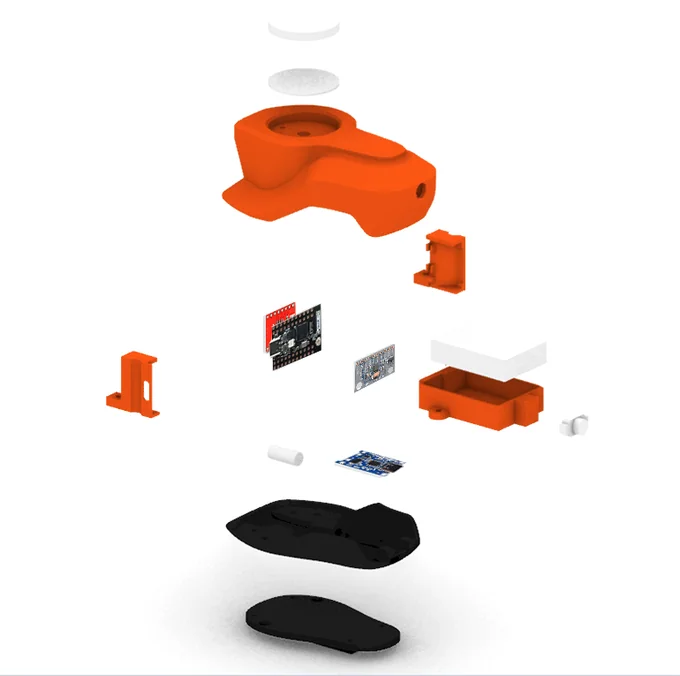
Lens + diffuser
over the status light
over the status light
Top shell
curved to the chest
curved to the chest
ESP32-S3 + DRV8833
main board, motor driver
main board, motor driver
Side bracket
holds the port
holds the port
Vibration motor
start-up buzz
start-up buzz
Base
takes the harness mount
takes the harness mount
Back plate
Side bracket
holds the switch
holds the switch
MPU6500
trunk IMU
trunk IMU
LiPo cell + tray
tray printed
tray printed
Push switch
Charge board
USB-C
USB-C
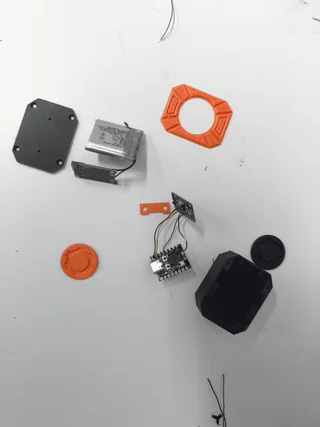
CLimb nodeexploded, ×4
Cap + button
printed, faceted
printed, faceted
Body
printed, USB-C cut-out
printed, USB-C cut-out
ESP32-C3
SuperMini board
SuperMini board
LiPo cell
size set by tests
size set by tests
Charge board
TP4056, USB-C
TP4056, USB-C
Base
strap channel
strap channel
MPU6050
stands upright
stands upright
3D-printed part Renders from the CAD model
DHardware architectureone session, from sensor to export
ENode managementbattery life against catching every event
How a sleeping node hears “start”
| Option | Hears the chest? | Wake delay | Idle draw |
|---|---|---|---|
| Deep sleep, radio off | no — needs a button | user | lowest |
| Periodic wake + listen | at each listen window | ≤ 1 interval | duty cycle |
| Low-power link kept | yes | short | higher |
| Button on the node | — | instant | none |
To measure, not assume: wake delay against current draw for each option, in the cold. Remote wake only works if the sleep mode still listens.
The buzz. The chest motor confirms start-up. Whether it should ever buzz during a run is tested on its own; it is off by default.
04 Detection · from motion to a marked moment
Not one threshold.
Three cues, in order.
Three cues, in order.
A single acceleration threshold can’t tell a fall from a jump landing or a hard turn. The rule is deliberately simple and explainable: it looks for a jolt, a sudden change in trunk angle and a drop in activity afterwards, and only when they come together does it mark a candidate for the coach to check against what they saw or filmed.
AWhat each node measures6-axis IMU, 50 Hz to start
| Node | Reads | Used for |
|---|---|---|
| Chest unit | trunk tilt, overall |a| | all three cues |
| Upper arms ×2 | rotation rate | balance reactions, arms thrown out |
| Shins ×2 | |a|, rotation | leg and ski motion, jolts |
Every node logs which way it is worn and runs on the chest unit’s clock, so traces line up across the body. Chest data helps read weight shifts, but it is not the body’s centre of mass.
BThe replay, one eventsix channels, −8 s to +8 s around the mark
10:42:07 · Run 6 · suspected fall · cues A + B + C
Illustrative trace, simulated for layout
CThe ruleexplainable on purpose: every mark shows its cues
DA 50 Hz peakis a lower bound
At 50 Hz, samples are 20 ms apart. A short jolt can fall between two of them (a); a hard one can go past the sensor’s full-scale range (b). Either way the recorded peak is lower than the real one.
So the replay shows peaks as “at least”, and sample rate and range are tested before any peak is read as an impact.
EWhy not one thresholdexpected behaviour, by design
| Movement | A | B | C | One |a| threshold says | The rule says |
|---|---|---|---|---|---|
| Jump landing | fall × false alarm | not marked | |||
| Hard turn | maybe a fall × | usually not marked | |||
| Bumpy snow | falls, again and again × | vibration: check | |||
| Loose strap, one node | falls, on one limb × | vibration: check the strap | |||
| Sits back, recovers | nothing × missed | minor imbalance | |||
| Falls, stays down | fall | suspected fall |
clear partial absentNot results: each row becomes a test case in stages 1–2 (p. 06)
FKnown limitswritten into the design, not the small print
- Thresholds come from recorded data, per body position and movement. None are fixed in advance.
- An IMU can’t measure skiing speed reliably, so “slow after the event” is written as “less active after the event”.
- Sustained vibration may be the snow, normal skiing or a loose strap. It asks for a check and never counts as a fall.
- How small a movement the MPU6500 and MPU6050 can resolve is settled by calibration and noise tests, not the datasheet.
- Every mark is a candidate. Nothing on screen says whether a child is hurt, or how badly.
G What one mark carries · the event record
event10:42:07.36 · run 6 · Mia L.
rulev0.3 · cues A B C
window−8 s … +8 s · 6 channels
peak |a|≥ 5.4 g, chest · at least
gapsleft shin, 0.4 s, link dropped
coachconfirmed · “sat back on the steep bit”
sharedparent: note only · video off
05 Interface · app and web
Quiet on the slope.
Clear after the run.
Clear after the run.
The coach’s phone does three jobs: check the kit before the lesson, stay out of the way during it, and open the replay afterwards. Parents get the coach’s words, not graphs. The web view is for the longer debrief and the Ski Safe lesson plan.
Designed here, not yet built
Where each screen sits
Seven rules the screens follow
- 1One tap checks the kit: link, battery and data for all five nodes.
- 2The child gets a buzz, never a screen: one at the start, nothing during a run.
- 3Nothing beeps during a run. Marks wait until the coach opens the replay.
- 4A mark is a candidate until the coach confirms or rejects it.
- 5Gaps are drawn, never smoothed over; a dropped link stays visible.
- 6Families read sentences, not scores, curves or red alerts.
- 7Sharing follows consent: video and records go only as far as the guardian allows.
8:52
‹ Group BSat 14 FebHelp
Before the lesson · child 1 of 6
Kit check
Mia L., 85 / 5 ready
Data arriving5 of 5
Clock synced · orientation logged · lowest battery 76%, enough for about one lesson
Start recording
The chest unit buzzes once to confirm
Next: Leo W.5 more to check ›
10:16
Recording · Group B
Run 4
03:12
since the group left the lift
Mia L.
Leo W.
Ava C.
Sam K.
Zoe H.
Ben T.
Ava’s right shin: weak link, still caching
Mark this moment
Hold to add a voice note
No alerts during runs.
2 marks will be waiting in the replay.
2 marks will be waiting in the replay.
01 Kit check
Link, battery and data for each node, then one button. The aim: six children checked in the time it takes to fit helmets.
02 On the snow
Big type for gloves and glare. The coach can mark a moment; the system stays silent.
11:05
‹ Group BReplayShare
After · Sat 14 Feb · 9:30–10:50
Mia’s lesson
6 runs · all five nodes recorded · synced 10:58
fall
imbalance
vibration
your mark
To review · 7newest first
Suspected fall
10:42run 6 · cues A B C
Your mark
10:31voice note · 0:08
Minor imbalance
10:21run 4 · moving again in 1.2 s
Vibration
10:17left shin only · check the strap
Minor imbalance
10:05run 3 · moving again in 0.9 s
GroupReplayNotesKit
11:06
‹ Mia’s lesson1 of 7Next ›
10:42:07 · run 6 · −5 s to +7 s
Suspected fall
Cues A + B + CCandidate
What changed most · vs her usual run
Trunk
Arms
Legs
Moving again after
activity back to her normal
5.8s
Left shin: 0.4 s gap, link dropped. Not filled in.
Confirm
Not a fall
Add a note or a clip
03 Lesson replay
The whole lesson on one line. Marks queue up for review instead of interrupting the run.
04 Event
When, where on the body, and how long until moving again. Then the coach decides.
11:09
‹ EventNotePreview
To Mia’s family · draft
What happened today
On her last run Mia sat back on the steeper part and went down. She was up and skiing again in about six seconds and finished the run with the group.
Started from the event details · written by Coach Chen
Practise next
Hands forward: “carry the tray”
Three short runs on the blue slope · from the Ski Safe drill list
Share with the family
Coach’s note
The moment, in wordstime, what happened, moving again
Motion curves
Video clipneeds the guardian’s consent first
Send to Mia’s family
05 Note to the family
A sentence and one drill. Curves and video stay off unless the coach, and the guardian, choose otherwise.
18:20
Fall Line.Family
Sat 14 Feb · Group B
Mia’s lesson
Linking turnsSteeper snow
From Coach Chen
On her last run Mia sat back on the steeper part and went down. She was up and skiing again in about six seconds and finished the run with the group.
One moment
Run 6 · sat back on the steeper part · up again in about 6 s
Practise next
Hands forward: “carry the tray”
Next lessonSat 21 Feb · 9:30
Reply to Coach Chen
No scores, no alarms. You see what the coach chose to share.
06 Family view
The same note, a picture of the moment, one thing to practise.
app.fallline.cc / group-b / 2026-02-14 / mia
Fall Line.Group B / Sat 14 Feb / Mia L.
Export CSVAdd to lesson plan
Group B · 6 children
Mia L.6 runs · 5 marks1
Leo W.6 runs · 1 mark1
Ava C.weak link, right shin2
Sam K.6 runs · no marks—
Zoe H.5 runs · 2 marks2
Ben T.6 runs · 2 marks1
Lesson
9:30–10:50 · 6 runs
Synced 10:58 · one gap, marked
Synced 10:58 · one gap, marked
10:42:07 · run 6 · candidate 1 of 7
Suspected fall
Cues A + B + CNot yet decided
A · joltyes, chest and both shins
B · angletrunk tipped back, about 80°
C · activitylow for 5.2 s
Moving again5.8 s
Peak |a|≥ 5.4 g, chest · at least
Videosynced by timestamp, ±0.1 s
Coach decision
ConfirmNot a fall
Note
Sat back on the steep bit; hands dropped behind her just before the turn.
Data quality
All five nodes on one clock
Wearing direction logged
Left shin: 0.4 s gap, link dropped. Shown as a gap.
Ski Safe · next lesson
Hands forward: “carry the tray”
for Mia · 3 short runs on the blue
Shared with family
Note and the moment in words. Video off.
07 Web debrief
For the longer conversation at the desk: the coach’s clip, all six channels and the decision side by side.
Every child in the group in one list; the whole lesson on a scrubber underneath.
Raw data leaves as CSV. A drill goes straight into the Ski Safe plan.
The child’s interfaceproposed
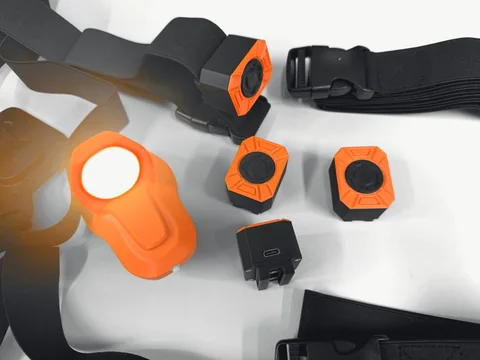
Light onpowered, ready to pair
One buzzrecording has started
Two buzzesa node is missing: tell the coach
During a runnothing to read, nothing to press
06 Prototype · making and validation
Built and worn.
Detection still to be proven.
Detection still to be proven.
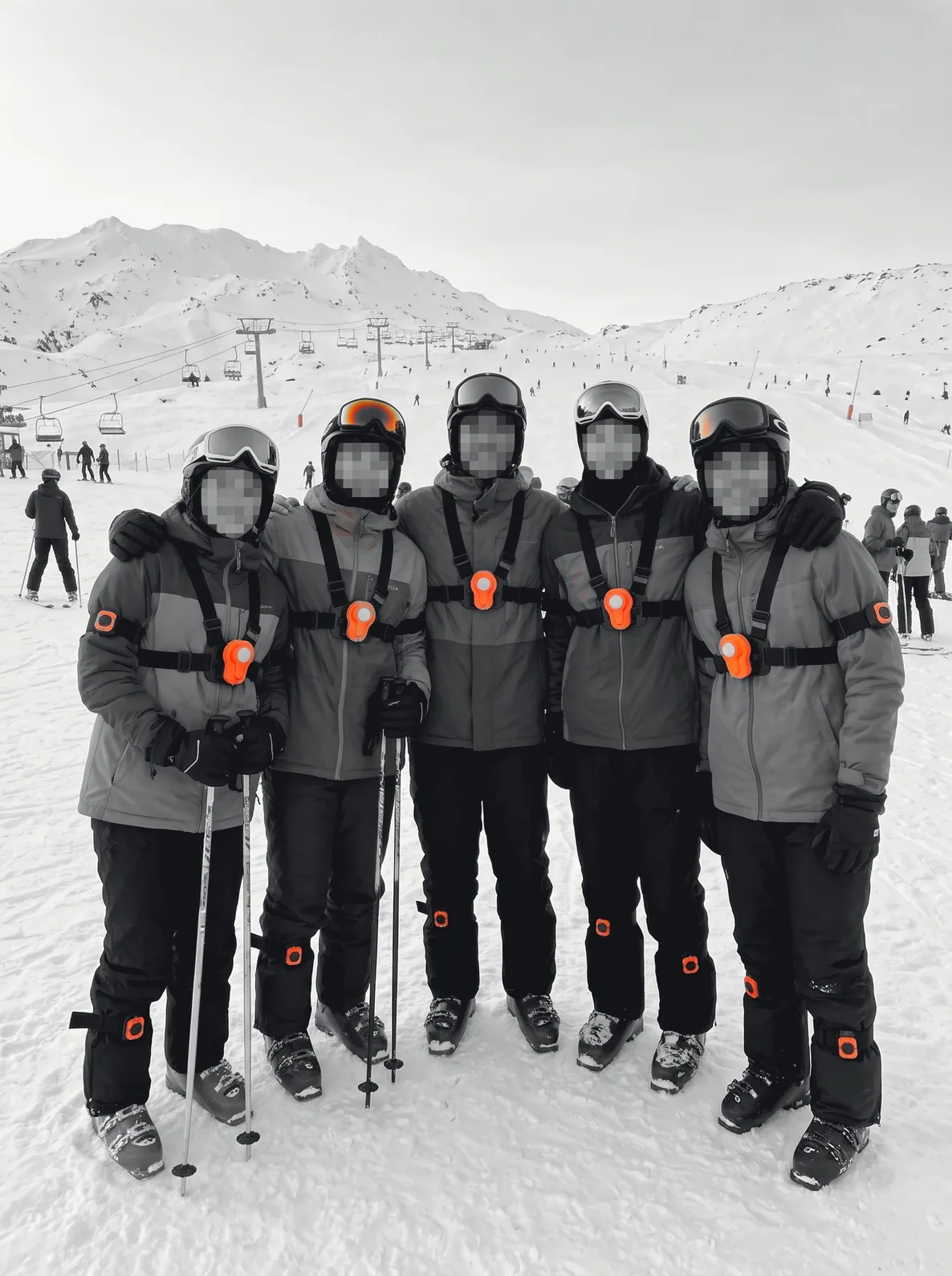
The housings were modelled around the boards and 3D-printed, the electronics wired and fitted by hand, and the full set has been worn indoors and on snow. How well the rule finds real events is the next thing to prove: in stages, starting with adults, checked against video, and never by asking a child to fall.
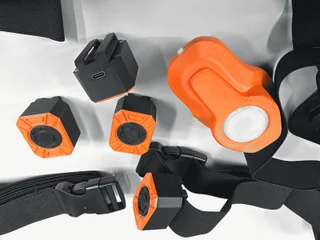
AMaking itmodel, print, wire, solder, fit
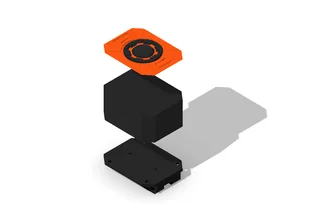
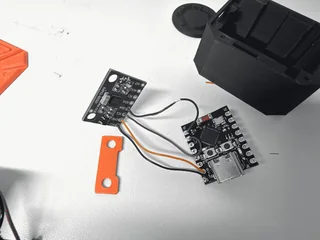
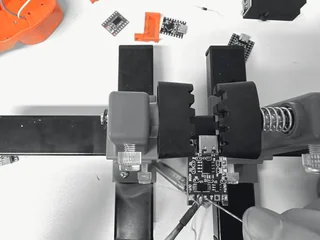
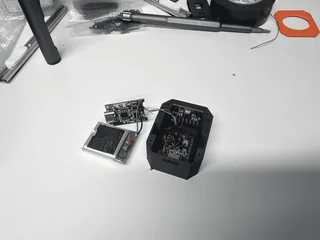
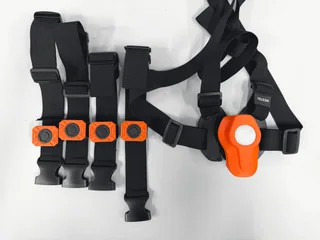
01 ModelHousings drawn around the boards, cap and base split for printing
02 PrintShells, caps, brackets and trays in orange and black
03 WireMPU6050 to the ESP32-C3 over I²C, four wires
04 SolderUSB-C charge board, battery leads, in the jig
05 FitCell, charger and boards packed into one node body
06 KitOne chest unit on a harness, four nodes on straps
I broke my arm skiing. This won’t stop that happening to someone else. What it can do is give their coach a clearer look at the seconds before, and one specific thing to practise next.
Next · stage 1 recordings · tune thresholds · build the app
Stage 3 children wearing it: comfort and data first
Wearing check on snow. Faces blurred.
BWhere it standskept apart on purpose
Built
- Chest unit and four limb nodes
- Printed housings, harness and strap mounts
- Worn indoors and on snow
To prove
- How often the rule misses, or marks what isn’t there
- Time alignment across the five nodes
- Comfort, battery in the cold, link stability
Designed, not built
- Coach app, family view and web debrief (p. 05)
Separate study
- Pop-out cushioning mechanism: tabletop and dummy only, never worn (E)
DHow a mark gets checkedrule against video, event by event
—
Misses, per real event
—
False alarms, per hour
—
Median offset, in ms
Left blank until stage 1 and 2 recordings exist.
CFour stagesadults first; children only for comfort and data
0Benchcalibration and noise
1Adults, flatrun, jump, squat, low-risk moves
2Adults, snownormal skiing, turns, stops
3Childrenconsent, coach on site, usual pads
Noise and calibration
False alarms
Misses
Time alignment
Comfort
Battery in the cold
Link stability
main focus also checked
Falls are only analysed when they happen naturally. No child is ever asked to fall; records and images stay within what guardians agree to.
ECushioning mechanisma separate principle study
1 a bench trigger, not the wearer’s data 2 the latch lets go 3 a spring opens the pad, then it is reset by hand.
A pad that opens is not a pad that protects.
And a mark is not a warning: cue C needs the seconds after impact, so a mark always arrives after the fall.
F Inside · what “mostly printed” means
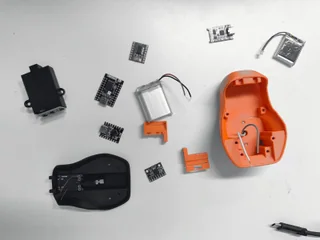
Chest unit opened: printed shell, brackets, tray
A node in parts: printed cap, button, base